Korean Winter Food: Which Soups and Snacks to Try
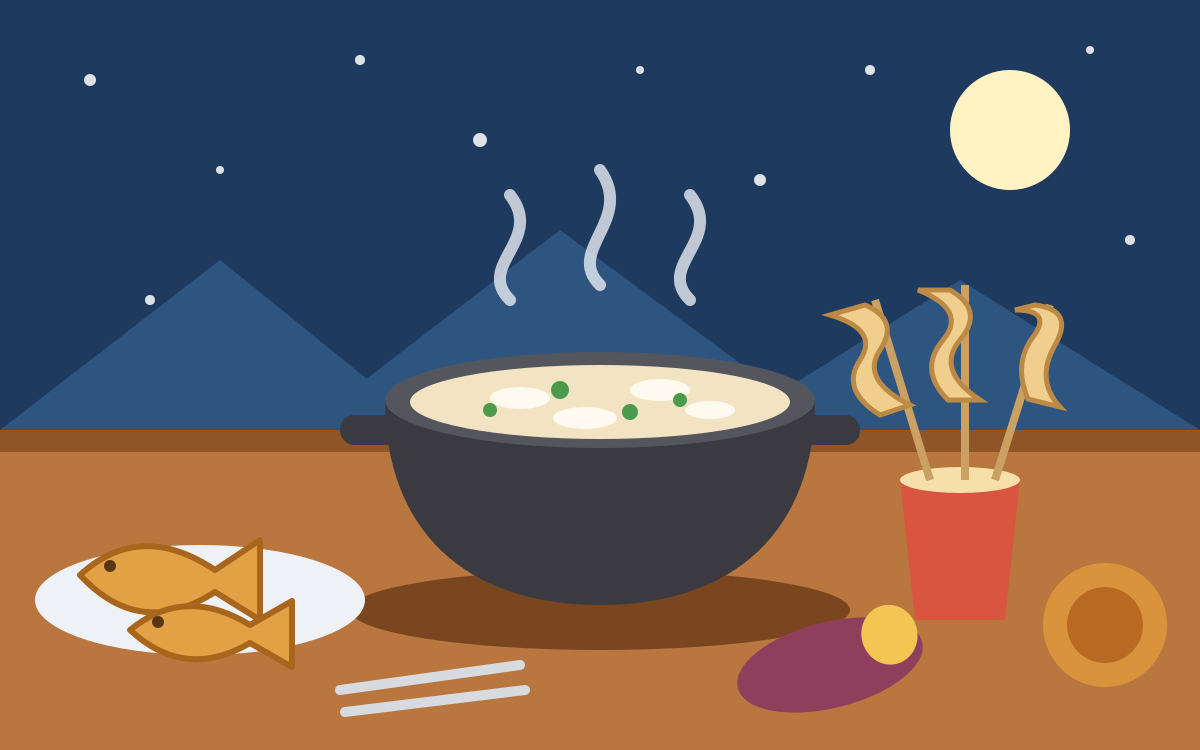
Spend about 9,000 won on a bowl of knife-cut noodle soup, then try 2,000-won street snacks. Good first picks are gomtang or seolleongtang, a bubbling kimchi stew, fish cake skewers in hot broth, hotteok sweet pancakes and fish-shaped bungeoppang. Prices vary by shop.
- Soup meal
- National averages, September 2026: kalguksu 9,071 won, samgyetang 16,875 won
- Street snacks
- Bungeoppang 3 for 2,000 won at one Seoul spot, early November 2026
- Mild choices
- Gomtang, seolleongtang, tteokguk, samgyetang
- Official reading
- VISITKOREA winter snack feature
What should I know before I arrive?
Details checked November 29, 2026
Plan one sit-down soup meal and one snack stop a day, and expect snack prices to differ from older guidebooks. Stall hours and menus are set by each vendor.
- Worth knowing: Seoul Economic Daily reported on November 6, 2026 that winter snack prices have climbed, citing red beans, gas for griddles and imported ingredients.
- A common mistake: Assuming a pale soup has no seasoning left to add. Many bone and meat soups are finished at the table.
- Local tip: VISITKOREA notes that popular snack items can sell out quickly, so go early if one stall matters to you.
Which Korean soups should I try in winter?
Start with a mild beef soup such as gomtang or seolleongtang, then try a red, spicy stew once you know your heat limit. Korean menus separate soups by name: guk is a lighter soup served in individual bowls, tang is simmered longer, jjigae is a thicker, richer stew and jeongol is a shared hot pot, as the Michelin Guide's Korean soup explainer and the Korean Food Promotion Institute magazine describe.
| Dish | What it is | Heat | Price guide |
|---|---|---|---|
| Seolleongtang | Milky soup simmered from ox leg bones, with some meat | Mild | See shop menu |
| Gomtang | Clearer broth made by boiling meat | Mild | See shop menu |
| Tteokguk | Sliced rice cake soup, the Lunar New Year dish | Mild | See shop menu |
| Kalguksu | Knife-cut wheat noodles in hot broth | Usually mild | 9,071 won national average* |
| Samgyetang | Whole young chicken soup with ginseng and rice | Mild | 16,875 won national average* |
| Kimchi jjigae set | Kimchi stew served with rice and sides | Spicy | 9,092 won national average* |
*Averages for September 2026 from the Korea Consumer Agency's price portal, as reported by Asia Economy (in Korean). Individual restaurants, especially in tourist districts, can charge more.
- Tteokguk: The Korean Food Promotion Institute magazine describes it as the soup Koreans eat on Lunar New Year. Many snack restaurants serve it, often with dumplings as tteok-mandu-guk.
- Samgyetang: The same source links it to restoring energy in summer, yet restaurants that specialise in it make a warming winter meal too.
- Gukbap: Rice goes into the soup in one bowl. Examples include pork-and-rice soup (dwaeji gukbap), strongly associated with Busan, and bean sprout soup with rice (kongnamul gukbap).
How do I order and eat a hot soup meal?
Order one bowl per person, taste the broth first, then season it with what is on the table. Stews and hot pots are the exception, since they are often shared from one pot.
- Find the specialist: Soup houses often list only a few dishes. Look for the dish name, such as 곰탕 (gomtang), 설렁탕 (seolleongtang) or 칼국수 (kalguksu), on the sign.
- Check the order system: You may find a kiosk, a table tablet, a call button or a server. Our restaurant ordering guide explains each.
- Taste before seasoning: The Michelin explainer notes that salt, green onion or chili paste may be added to tang dishes.
- Add rice your way: Spoon rice into the bowl or eat it alongside. Both are normal.
- Handle the pot carefully: Soup can arrive boiling in an earthenware bowl. Let it settle and do not lift the pot.
- Pay at the counter: In most casual restaurants you pay as you leave, and tipping is not expected.
Practical example: at a gomtang shop, taste one spoonful, add a small pinch of salt and the chopped green onion, stir, taste again, and eat the kimchi on the side between spoonfuls.
Which winter street snacks should I look for?
The classics are bungeoppang, hotteok, eomuk, gyeranppang (egg bread) and roasted sweet potato. VISITKOREA describes how the first four are made.
| Snack | What it is | Reported price | Source and date |
|---|---|---|---|
| Bungeoppang | Fish-shaped pastry with red bean paste or custard | 3 for 2,000 won (near Sindang Station, Seoul) | Sedaily, Nov 2026 |
| Hotteok | Chewy griddled dough with a sugar and cinnamon filling | 2,000 won each (one Gwanghwamun vendor) | Sedaily, Nov 2026 |
| Gyeranppang | Sweet batter with a whole egg baked on top | About 2 for 3,000 won at street carts | Sedaily, Nov 2026 |
| Eomuk | Fish cake on skewers kept in hot broth | About 500 to 1,000 won a stick (old price) | Korea.net, Dec 2021 |
| Gun-goguma | Roasted sweet potato | About 2,000 to 3,000 won (old price) | Korea.net, Dec 2021 |
Treat the 2021 figures as a floor, not a current quote. The bungeoppang report also says some vendors charge 1,000 won for a single piece, and cafes charge more.
- Eomuk broth: It is often sipped from a paper cup. Dip the fish cake in soy sauce if the stall offers it, and keep your used skewers where the vendor can count them.
- Hot fillings: The syrup inside hotteok can burn, so take a small first bite.
- Payment: Carry some small notes, because we found no official rule saying every cart accepts cards. See cash or card in Korea.
- Convenience stores: Several chains also sell fish cake, sweet potatoes or fish-shaped pastry in the cold season, though stock differs by branch.
For sweet snacks in more detail, read our hotteok and bungeoppang guide.
Where can I find winter food in Korea?
Traditional markets are the easiest place to combine a hot meal and snacks in one visit. The VISITKOREA snack feature (December 2025) points to these places; confirm hours before you go.
- Gwangjang Market, Seoul: 88 Changgyeonggung-ro, Jongno-gu; hours vary by shop. See our Gwangjang Market guide.
- Mangwon Market, Seoul: 27 Poeun-ro 6-gil, Mapo-gu, including a hotteok stand.
- Myeong-dong, Seoul: Street kiosks, including egg bread; our Myeongdong night market guide covers timing.
- Bupyeong (Kkangtong) Market, Busan: 48 Bupyeong 1-gil, Jung-gu, known for its fish cake alley; listed as 08:00 to 20:00, with a night market from 19:30.
- Dongmun Market, Jeju City: 20 Gwandeok-ro 14-gil, with a hotteok alley; listed as 08:00 to 21:00.
Looking for a cart near you? The Culture Ministry's bungeoppang story (December 2024) says Koreans use crowd-sourced maps on the Karrot community app to find vendors, though these are made mainly for local users.
How much should I budget for a winter food day?
About 15,000 won per person covers one noodle soup lunch and a snack stop, before drinks or a larger dinner.
- Lunch: One bowl of kalguksu at the national average, about 9,100 won.
- Afternoon: Two hotteok at 2,000 won each, 4,000 won.
- Evening walk: Three bungeoppang to share, 2,000 won.
- Total: About 15,100 won. Swapping lunch for samgyetang raises it to about 22,900 won.
These are illustrations built from the sourced prices above, not a quote from any one shop. For a whole-trip view, see Korea daily budgets, and check December weather before planning long outdoor snack walks.
What if I avoid meat, seafood or spice?
Ask about the broth, not just the toppings, because many soups use beef, pork, anchovy or seafood stock.
- No meat or fish: Ask "Gogi-na saengseon yuksu isseoyo?" (Is there meat or fish stock?). Our vegetarian and vegan guide has more phrases.
- Less spice: Ask "An maepge haejuseyo" (Please make it not spicy). Some stews cannot be changed; see how spicy Korean food is.
- Allergies: Wheat, egg, nuts, seeds and shellfish can appear in snacks and soups. If a reaction would be serious, show a written Korean note and skip the item when the vendor is unsure.
- Help in English: The Korea Travel Hotline, 1330, can help with travel questions and interpretation; see VISITKOREA.
FAQ
What do Koreans eat in winter?
Hot soups and stews with rice, such as gomtang, seolleongtang, kimchi jjigae and knife-cut noodle soup, are everyday cold-weather meals. Outdoors, people snack on fish cake skewers, hotteok, bungeoppang, egg bread and roasted sweet potatoes.
How much does Korean winter street food cost?
In early November 2026, one Seoul report found bungeoppang at three for 2,000 won near Sindang Station and hotteok at 2,000 won each at a Gwanghwamun stall. Prices differ by vendor, so check the sign before ordering.
What is the difference between gomtang and seolleongtang?
According to the Korean Food Promotion Institute magazine, seolleongtang is simmered from ox leg bones and looks milky, while gomtang is made by boiling meat and has a clearer broth with yellow fat on top.
Is Korean soup spicy?
Not always. Gomtang, seolleongtang, tteokguk and samgyetang are usually mild and pale, while kimchi jjigae, yukgaejang and many soft tofu stews are red and spicy. Ask before you order if you avoid heat.
Can vegetarians eat Korean winter soups?
Many are made with beef, pork, anchovy or other seafood stock, even when no meat is visible. Ask the restaurant about the broth, and treat fish cake as a seafood product.
Official sources and useful links
Links open in a new tab. Prices were checked on November 29, 2026 and change often.
- VISITKOREA: winter street snacks how classic snacks are made and market addresses
- Korean Food Promotion Institute: Korean broth tteokguk, samgyetang and gukbap background (in English)
- Korean Food Promotion Institute: gukbap seolleongtang, gomtang, jjigae and jeongol differences
- Ministry of Culture, Sports and Tourism: bungeoppang history and fillings of the fish-shaped pastry
- Korea.net: staff winter snacks 2021 price ranges for fish cake and sweet potato
- Michelin Guide: Korean soups guk, tang, jjigae and jeongol explained
- Asia Economy: restaurant price averages September 2026 Korea Consumer Agency figures, in Korean
- Seoul Economic Daily: snack prices November 2026 street prices in Seoul
Disclosure: This site shows ads served by Google AdSense, and some links may be affiliate links that earn a small commission at no extra cost to you. This never affects our recommendations. Prices and rules change, so please confirm details with the official sources before you travel.