How to Order at a Korean Restaurant: Bells and Kiosks
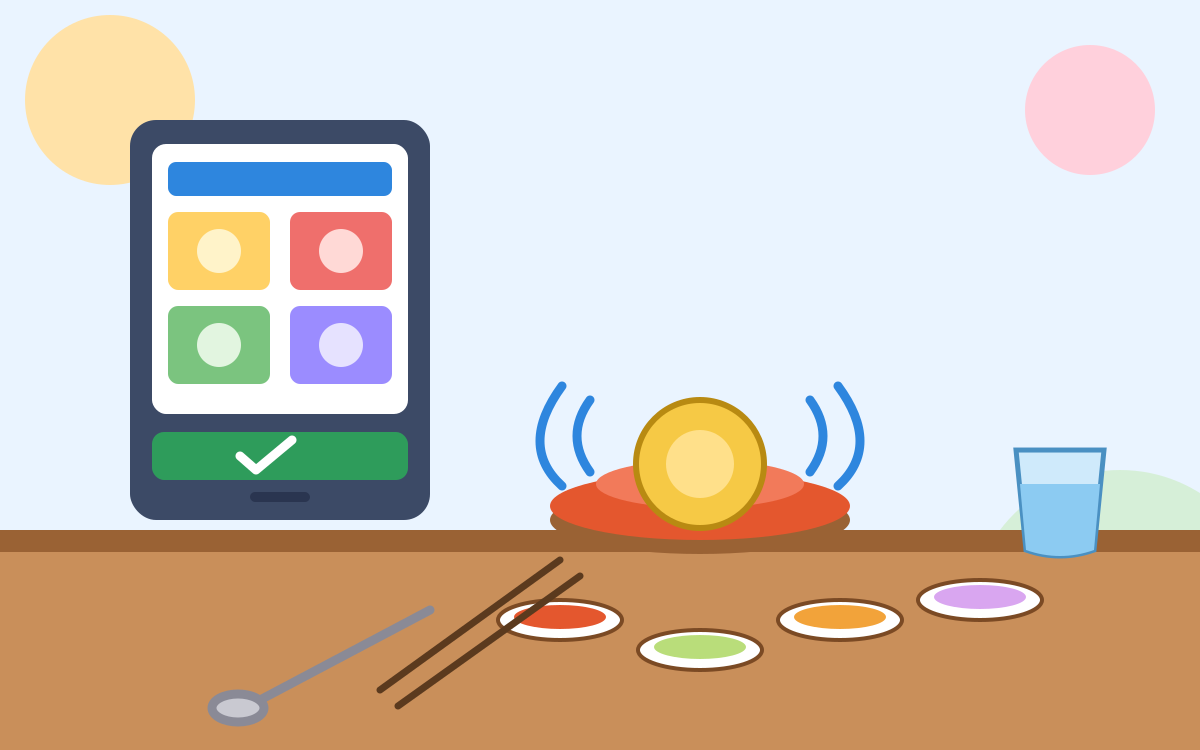
Press the call button on your table or say "Yeogiyo!" to order. Some restaurants use ordering machines instead. Water and basic side dishes are usually free to refill, and no tip is expected. Check the minimum number of portions before you sit, and pay the bill at the counter on your way out.
- Call staff
- Table call button, or "Yeogiyo!" (Excuse me!)
- Water and sides
- Usually free to refill; often self-service
- Tipping
- Not expected
- Official page
- VisitKorea: About Korean Food
What should I know before I arrive?
Rules checked October 16, 2026
Ordering in Korea is more self-directed than in many countries: you often call staff yourself, you may order from a machine, and water and side dishes are usually included. According to VisitKorea, more and more restaurants are adopting self-service systems, where diners get their own water and side dishes or use unmanned ordering machines. Where there is no self-service, staff help diners.
- Worth knowing: Every table has a call button, and VisitKorea says to press it when you need a server.
- A common mistake: Waiting for a server to return. Staff may not stop by unprompted, so call when you are ready.
- Local tip: Look at the table first. A small round button, a drawer with spoons and chopsticks, or a water dispenser tells you how the restaurant works before anyone speaks.
How do I get a server's attention?
Press the call button on the table, or call out "Yeogiyo!" (Excuse me!) if there is none. VisitKorea says every table has a call button and warns that its sound may be louder than you think. It also says to call out "Yeogiyo!" when you want to order more or ask a question.
Calling out is normal in Korea and is not considered rude. Keep your voice friendly, make eye contact if you can, and say it once. A second press is only needed if no one has come after a few minutes.
Practical example: at a busy lunch spot, press the button once after you have decided, say what you want when the server arrives, and press it again only when you are ready for the bill or a refill.
How do ordering machines and kiosks work?
At some restaurants you order and pay at an unmanned machine near the door, then take a seat; at others a tablet on the table sends your order to the kitchen. VisitKorea confirms that restaurants are using unmanned ordering machines but does not explain how each one works, and screens differ by brand.
- Look near the entrance. A screen by the door, or a sign with a picture of a machine, means you may need to order before sitting.
- Find a language option. Many screens have a globe or flag icon; if yours does not, use the photos on the menu.
- Select dishes and portions. Add items to the cart and check the quantity and price before confirming.
- Pay when the screen asks. Some machines take a card at once, and others print a ticket that you hand to staff. Keep both a card and some cash with you in case a machine accepts only one.
- Ask if you are stuck. Staff will usually help, as VisitKorea notes.
These steps describe the common pattern, not a rule for every restaurant. If a screen looks different, follow the on-screen prompts or ask staff.
Are water and side dishes really free?
Yes, in most restaurants: VisitKorea says requests for extra water or side dishes do not incur additional charges. The rule is a custom, not a law, so there are limits worth knowing about.
| Item | Usual practice | What to check |
|---|---|---|
| Water | Free; often self-service from a dispenser | Look for a dispenser or a "self" sign |
| Basic banchan (kimchi, pickles) | Included and refilled free, per VisitKorea | Some owners are debating charges for refills |
| Special side dishes | May cost extra | Check the menu before you order |
| Rice and soup | Often part of a set meal | Some dishes list rice separately |
| Tip | Not expected | Pay the bill amount only |
The Korea Times reported in February 2026 that small restaurant owners are debating whether to end unlimited free side dishes because of rising ingredient prices, and that many eateries are adopting self-service side-dish bars. It did not say how many restaurants have started charging. Korea.net also notes that banchan are served free, and that in served-style restaurants you ask staff for a refill.
How do I order a meal step by step?
Sit down, read the menu, call staff, order by dish and portion, share the side dishes, then pay at the counter.
- Check how ordering works. Look for a kiosk by the door, a tablet on the table or a call button.
- Look for portion minimums. Some grill restaurants ask for two portions per table. VisitKorea does not list a rule, so ask staff.
- Call staff and order. Say the dish name and a number, or point at the menu and say "Igeo juseyo" (please give me this).
- Use the table set-up. VisitKorea says rice, soup, spoons and chopsticks are placed in front of each diner, and that using a spoon with chopsticks is perfectly fine. Utensils are often kept in a drawer or box on the table.
- Share the side dishes. VisitKorea says banchan are shared and that how you eat them is up to you.
- Ask for refills. Point at an empty dish and say "Igeo deo juseyo" (more of this, please), or use the self-service station if there is one.
- Take the bill to the cashier. Most restaurants settle the bill at the counter near the exit.
Follow table manners from Visit Seoul: start eating once the eldest person begins, do not stand your chopsticks or spoon upright in rice, and put them back in their original position at the end of the meal.
How do I pay, and do I tip?
Pay the bill amount at the counter or ordering machine; no tip is expected. VisitKorea says there is no need to tip, and Visit Seoul says tipping is not customary in Korea, though some people may accept it while others refuse.
- Where to pay: Many restaurants ask you to pay at a counter when you leave. Some machine-based restaurants take payment before you eat.
- Cards and cash: Cards are widely accepted, but keep some cash for small or older places. See our guide to cash or card in Korea.
- Splitting the bill: Ask before the meal if you want separate payments, since a single table order may be entered as one bill.
Which Korean phrases help most?
Five short phrases cover almost every ordering situation: calling staff, pointing, asking for more, asking for water and asking for the bill. VisitKorea lists "Yeogiyo!" for calling staff; the others are standard Korean restaurant phrases.
| Situation | Say | Meaning |
|---|---|---|
| Calling staff | Yeogiyo! | Excuse me! |
| Ordering | Igeo juseyo | Please give me this |
| More side dishes | Igeo deo juseyo | More of this, please |
| Water | Mul jom juseyo | Water, please |
| Paying | Gyesan haejuseyo | The bill, please |
If you are comfortable using the Korean alphabet, a translation app or a photo of the menu can fill any gaps.
FAQ
Do I have to order a drink at a Korean restaurant?
No. Water is normally free, and VisitKorea says extra water does not incur additional charges. Ordering beer, soju or a soft drink is optional.
Are side dishes free in Korea?
Basic side dishes (banchan) are usually included and refilled at no charge, according to VisitKorea. Some owners are debating charging for refills, so treat free refills as common but not guaranteed.
Do I need to tip at a Korean restaurant?
No. VisitKorea says there is no need to tip, and Visit Seoul calls tipping not customary. Pay the amount on the bill.
What if the restaurant has no English menu or kiosk?
Point at a menu photo or a dish at another table and say "Igeo juseyo" (please give me this). Staff will usually help, as VisitKorea notes.
Official sources and useful links
Links open in a new tab. Rules and prices change; verify on these pages.
- VisitKorea: About Korean Food official guide to call buttons, free side dishes, ordering machines and tipping
- Visit Seoul: The Basics of Korean Etiquette Seoul's official page on table manners and tipping
- Korea.net: How do you like your banchan? government-run site on free side dishes and refills
- The Korea Times: Banchan culture February 2026 report on debates over unlimited free side dishes
- VisitKorea (Korea Tourism Organization) official tourism information in English
Disclosure: This site shows ads served by Google AdSense, and some links may be affiliate links that earn a small commission at no extra cost to you. This never affects our recommendations. Prices and rules change, so please confirm details with the official sources before you travel.