How to Order Korean BBQ Like a Local
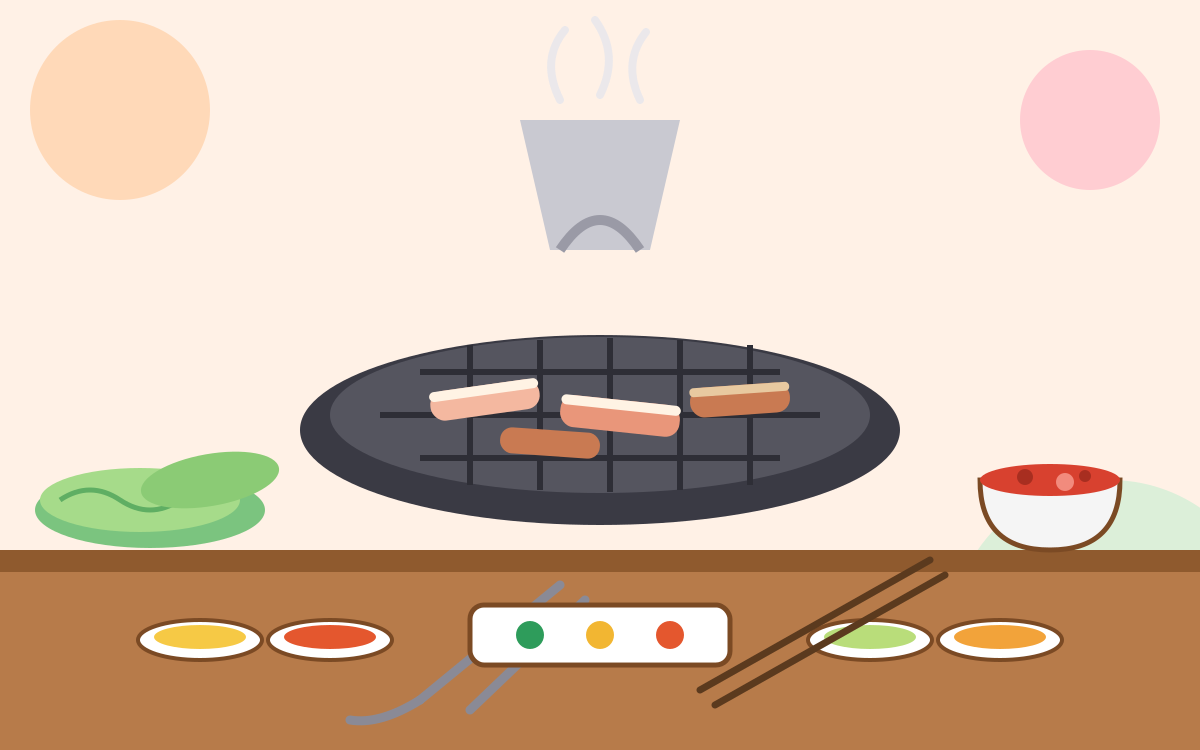
Order samgyeopsal (pork belly), which averaged about 21,321 won per 200g in Seoul in May 2026. Ask whether there is a minimum number of portions, grill the meat yourself unless staff do it, wrap pieces in lettuce with ssamjang, and skip the tip. Basic side dishes are usually refilled free.
- Classic order
- Samgyeopsal, about 21,321 won per 200g (Seoul, May 2026)
- Portions
- Often a minimum of two per table; ask first
- Tipping
- Not expected
- Official page
- VisitKorea: About Korean Food
What should I know before I arrive?
Prices and rules checked October 14, 2026
A Korean BBQ restaurant (gogi-jip) is a sit-down meal where raw meat is cooked at your table and eaten with side dishes, stews and noodles. According to VisitKorea, most tables have ventilation that removes smoke, and some restaurants have staff grill the meat for you.
- Worth knowing: Samgyeopsal, grilled pork belly, is the most popular meat dish and is easy to find in most neighbourhoods, per VisitKorea.
- A common mistake: Sitting down before checking how the menu is priced. Some restaurants price per portion and others by weight, and many set a minimum order of about two portions per table, so ask before you commit.
- Local tip: Say "Yeogiyo!" (Excuse me!) or press the call button on the table to get staff. VisitKorea notes that extra water or side dishes are usually not charged.
What should I order at a Korean BBQ restaurant?
Start with samgyeopsal (pork belly), then add a second cut such as moksal (pork neck) or galbi (ribs) if you want variety. Samgyeopsal is the safest first order because it is available at most gogi-jip and is the dish VisitKorea calls the most popular grilled meat.
| Cut | What it is | Pricing note |
|---|---|---|
| Samgyeopsal | Thick slices of pork belly | About 21,321 won per 200g in Seoul, May 2026 |
| Moksal | Pork neck, leaner and chewier | Check the menu; priced per portion or weight |
| Galbi | Marinated ribs, usually beef or pork | Check the menu; often costs more than pork belly |
| Hanu (Korean beef) | Premium domestic beef cuts | Check the menu; usually the most expensive option |
Practical example: two travellers can order two portions of samgyeopsal to meet a common two-portion minimum, then add a stew to share at the end of the meal.
How much does Korean BBQ cost?
Pork belly averaged about 21,321 won per 200g in Seoul in May 2026, so a two-person meal usually costs more than a single bowl dish. That figure comes from a news report citing Chamgagyeok (Korea Consumer Agency price portal), the Korea Consumer Agency's price portal; it is an average, so a restaurant near a tourist area may charge more or less.
- Per-weight pricing: The menu may list a price for 150g or 200g, so check the unit before you order.
- Drinks and extras: Soju, beer, stews and noodles are added on top of the meat price.
- Payment: Confirm which payment methods the restaurant accepts before you order.
Treat all prices as approximate and confirm on the menu. Visit the Chamgagyeok (Korea Consumer Agency price portal) for current averages.
How do I order and eat Korean BBQ step by step?
Sit down, order your meat and drinks, let the side dishes arrive, grill the meat, then finish with a stew or noodles.
- Ask about the minimum. Check whether the restaurant requires two portions. Many do, even for solo diners.
- Order by portion. Say the cut and the number of portions, for example "samgyeopsal, two portions" (samgyeopsal i-inbun). Some restaurants use a kiosk or ordering machine, as VisitKorea notes.
- Let the grill start. Staff may light the grill and place the first meat. Otherwise, lay slices flat and turn them with tongs.
- Cut and eat. Staff or diners cut thick pieces with scissors once browned. Eat each bite as soon as it is cooked.
- Refill the sides. Ask for more banchan (side dishes) and lettuce when they run low. Basic items are typically free.
- Finish the meal. VisitKorea notes diners often finish with doenjangjjigae (soybean paste stew) or fried rice. Naengmyeon (cold noodles) is another common closer.
- Pay and leave. No tip is expected. Pay at the counter or table as the restaurant directs.
How do I make a ssam wrap?
Put a piece of grilled meat on a lettuce or perilla leaf, add ssamjang, fold it up and eat it in one bite. VisitKorea describes ssam as meat on leaves with ssamjang, a red chili and soybean paste sauce, and advises opening your mouth wide and eating the whole wrap at once.
- Take a leaf. Use lettuce (sangchu) or perilla (kkaennip).
- Add meat. Place one cooked piece in the centre.
- Add flavour. Add a small dab of ssamjang and, if you like, garlic or grilled kimchi.
- Fold and eat. Close the leaf and eat it in one bite.
FAQ
How many portions do I have to order at Korean BBQ?
Many restaurants set a minimum, often two portions per table, even for solo diners. Check the menu or ask before you sit, and look for signs for solo diners if you are alone.
Do I grill the meat myself at a Korean BBQ restaurant?
Often yes, but VisitKorea notes that some restaurants have staff grill the meat for you. Watch the next table or ask the staff.
Do I tip at a Korean BBQ restaurant?
No. VisitKorea says tipping is not expected, and requests for extra water or side dishes are usually not charged.
Are side dishes free at Korean BBQ?
Banchan come with the meal, and basic ones such as kimchi are usually refilled at no charge. Specialty items may cost extra, so check the menu.
Official sources and useful links
Links open in a new tab. Prices above are approximate; verify on these pages.
- VisitKorea: About Korean Food official overview of Korean BBQ, banchan, ssam and dining customs
- Chamgagyeok (Korea Consumer Agency) official consumer price information portal, including dining-out prices
- Visit Seoul Seoul's official tourism site for restaurants and neighbourhoods
- VisitKorea (Korea Tourism Organization) official tourism information in English
Disclosure: This site shows ads served by Google AdSense, and some links may be affiliate links that earn a small commission at no extra cost to you. This never affects our recommendations. Prices and rules change, so please confirm details with the official sources before you travel.