Korean Drinking Etiquette Explained
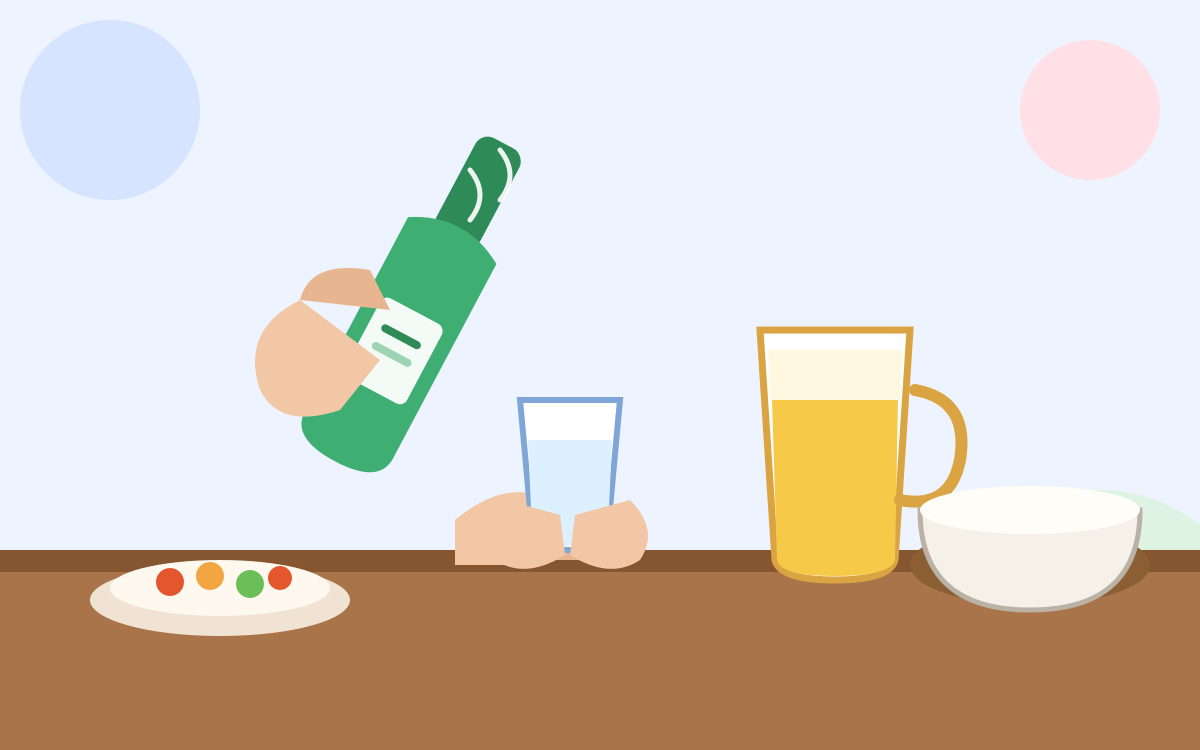
Never fill your own glass: pour for others, oldest first, and use two hands when serving or receiving from someone older. Turn your head aside to sip in front of seniors. The drinking age is 19, so carry your passport, and the driving limit is 0.03% blood alcohol.
- Pouring
- Pour for others; let others pour for you
- Legal age
- 19, including for foreign visitors
- Driving limit
- 0.03% blood alcohol
What should I know before I arrive?
Customs and rules checked October 15, 2026
Korean drinking manners are built on respect for age and rank, and the most important habit is to serve others before yourself. Korea.net describes customs such as receiving a drink with two hands from an older person and notes that they trace back to the Joseon era (1392 to 1910) and are still practised today.
- Worth knowing: Rules are strictest with elders, bosses and in-laws and loosest among close friends of the same age. Watch what the oldest person at the table does and follow along, as the general etiquette guide also advises.
- A common mistake: Filling your own glass. The Smart Local Korea says to refill other people's glasses, starting with the most senior, and not to pour for yourself; if you are empty, someone else will notice and pour.
- Local tip: You are not expected to be perfect. Two hands and a slight head turn show respect, and most hosts are glad to see a visitor try.
How do I pour and receive a drink?
Pour for others with one hand supported by the other, and receive with both hands, especially from someone older. Korea.net says a younger person receives a drink from an older one with two hands and a slight bow of the head. The Smart Local Korea adds that you can support the pouring arm at the elbow or chest, or hold a large bottle with both hands.
- Watch the glasses. Only refill empty glasses; The Smart Local Korea notes that a partly full glass signals someone wants to go slowly.
- Serve the most senior person first. Pour for them, then for the rest of the table, then let someone pour for you.
- Hold the glass with both hands. Offer your glass with two hands when someone pours for you, as The Mixer describes.
- Return the favour. Korea.net says the younger person offers the empty glass back to the older friend who poured and pours in return.
- Wait before drinking. Seoul Start advises waiting until everyone is poured before the first toast.
Practical example: at a company dinner, you notice your manager's glass is nearly empty. Reach for the bottle with your right hand, support your arm with your left, and pour before anyone asks.
How do I drink in front of older people or a boss?
Turn your head slightly away from the senior person and cover your mouth or glass with your free hand while you sip. Korea.net describes the younger person turning away from the older one and covering the mouth and glass with both hands while drinking, as a sign of respect. The Smart Local Korea describes turning the head to the side and covering the mouth with the left hand.
- Clinking glasses: Keep the rim of your glass a little lower than a senior's, per The Smart Local Korea. This matters less with close friends.
- The first glass: It is traditionally emptied in one go, which is the origin of the "one-shot" habit, then sipped slowly. Seoul Start says a sip is increasingly accepted.
- Empty bottles: Seoul Start suggests laying empty bottles down or moving them aside rather than standing them on the table.
Treat these as customs rather than laws. Different tables, ages and workplaces apply them with different strictness.
What are the drinking rounds?
A night out is often split into rounds called cha: il-cha (first round) is dinner, i-cha (second round) is a bar, and later rounds may include karaoke. Seoul Start describes the pattern, and says second and third rounds are increasingly optional.
| Round | Usual setting | Notes |
|---|---|---|
| Il-cha (1st) | Dinner, often Korean BBQ or stew | Roughly 7 to 9 p.m.; the senior person usually pays |
| I-cha (2nd) | Beer hall or pojangmacha tent | Roughly 9 to 11 p.m.; often split |
| Sam-cha (3rd) | Karaoke room (noraebang) | Often past midnight; optional |
These times and payment habits come from Seoul Start, and vary by group. The Smart Local Korea adds that most pojangmacha do not accept cards, so bring cash.
Which drinks will I be offered?
Expect soju, beer, a soju-beer mix called somaek, and makgeolli (milky rice wine). Prices differ by venue, so check the menu rather than relying on a fixed figure.
| Drink | What it is | Serving note |
|---|---|---|
| Soju | Clear spirit sold in small green bottles | Poured into shot glasses; Korea.net says green-bottle soju is diluted rather than distilled |
| Beer | Beer, often drunk alongside soju | Follow the same rule: let others pour for you |
| Somaek | Soju mixed into beer | Fill the beer glass about halfway, per The Smart Local Korea |
| Makgeolli | Milky, lightly sweet rice drink, about 6 to 7% alcohol | Typically served in a small bowl, per Korea.net |
The next morning, Korea.net notes that Koreans often eat hot soups such as kongnamulguk (bean sprout soup), and recommends drinking water while you drink.
Can I politely say no?
Yes. Give a brief reason, keep your glass partly full, and say you would like to go slowly. The Smart Local Korea suggests reasons such as medication, being the designated driver, religious reasons or an alcohol allergy, and notes that a partly full glass will not be topped up.
- Leaving early: Seoul Start says leaving after the first round is socially safe at many modern workplaces, because later rounds are increasingly optional.
- Know your limit: The Smart Local Korea advises knowing your limits and keeping the glass partly full if you get tipsy easily.
What are the legal rules for visitors?
The legal drinking age is 19, ID is often checked, and the drink-driving limit is 0.03% blood alcohol. Expat Guide Korea says the age limit of 19 applies to non-Korean residents and travellers, that most bartenders check ID, and that visitors should carry a passport. Seoul Law Group cites Article 44 of the Road Traffic Act, which defines drunk driving as a blood alcohol concentration of 0.03% or higher.
- Carry your passport: Busy nightlife areas such as Hongdae and Gangnam generally accept only a valid passport or alien registration card from foreigners, according to Expat Guide Korea.
- Do not drive after drinking: The 0.03% limit is very low. Use a taxi or public transport.
- Confirm current rules: Laws change, so check the official legal database at Korea Law Translation Center or ask your accommodation.
FAQ
Do I have to pour for other people in Korea?
It is the custom. Pour for others, starting with the oldest or most senior person, and let someone else fill your glass. If you are among close friends, the rules relax.
Can I say no to a drink in Korea?
Yes. A short, polite reason such as being the designated driver or taking medication is commonly accepted. Keeping your glass partly full also signals that you want to go slowly, because only empty glasses are normally refilled.
What is the legal drinking age in Korea for tourists?
It is 19, and it applies to foreign visitors too. Bartenders often check ID, so carry your passport.
What is somaek?
Somaek is soju mixed into beer. Per The Smart Local Korea, shot glasses of soju are lined up over half-filled beer mugs and knocked back together.
Is it okay to drink and drive in Korea?
No. The Road Traffic Act sets the limit at 0.03% blood alcohol. Take a taxi, a designated-driver service or public transport instead.
Official sources and useful links
Links open in a new tab. Customs vary by group; verify legal points on official pages.
- Korea.net: Korean drinking through traditional liquors official government site article on receiving, pouring and drinking etiquette (2018)
- Korea.net: Guide to Korean alcoholic beverages official government site overview of soju, makgeolli and morning-after soups (2022)
- Korea Law Translation Center official English translations of Korean laws, including the Road Traffic Act
- VisitKorea (Korea Tourism Organization) official tourism information in English
- The Smart Local Korea: Korean drinking culture reputable travel guide used for pouring, refusing and pojangmacha details
Disclosure: This site shows ads served by Google AdSense, and some links may be affiliate links that earn a small commission at no extra cost to you. This never affects our recommendations. Prices and rules change, so please confirm details with the official sources before you travel.