Seoul Subway Transfers and Exits: How Not to Get Lost
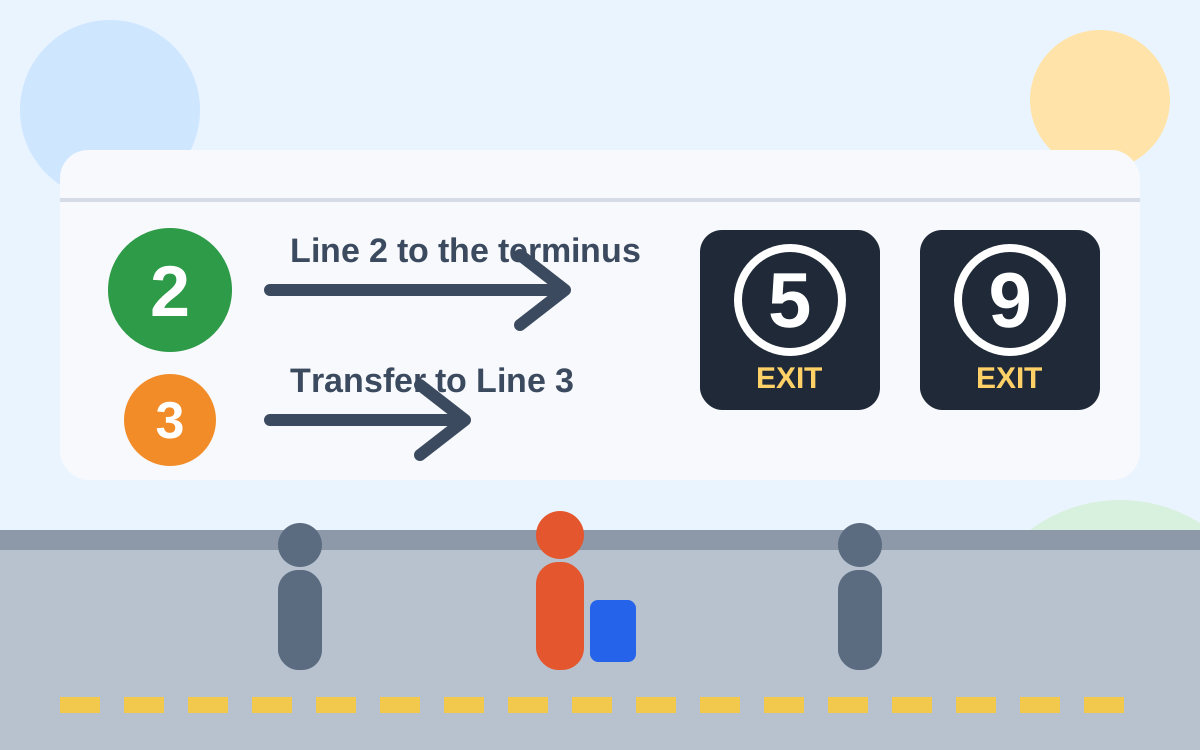
Transfers between lines are free if you stay inside the gates, so follow the colour and number of your next line. Every exit is numbered, so confirm your exit before you board. Line 2 is a loop, so choose clockwise or counter-clockwise before you get on.
- Transfers
- Free before you pass a turnstile (Sinbundang Line adds a fee)
- Exits
- Numbered; check yours before you board
- Line 2
- Loop: clockwise is inner circle, counter-clockwise is outer
- Official page
- Visit Seoul: Subway
What should I know before I arrive?
Rules and details checked October 14, 2026
Most getting-lost moments in the Seoul subway happen at two points: the transfer corridor and the exit. Visit Seoul says station signs are in Korean, English and Chinese and that a distinctive colour represents each line, so the signs are designed to be followed by colour and number even if you cannot read Korean.
- Worth knowing: Transfers between lines are free if you make them before exiting through the turnstile, according to VisitKorea. The exception is the Sinbundang Line, where an extra fee depends on the section.
- A common mistake: Leaving the paid area by accident and tapping in again. Follow the transfer signs instead of the exit signs, because Visit Seoul notes that line changes happen inside the station.
- Local tip: Check the exit number in your map app before you board. A guide from Namane Card (an unofficial site) says the wrong exit can add five to fifteen minutes of walking at street level.
How do I read line colours, numbers and directions?
Follow the colour and number of your line, then pick the platform by the name of the last station in your direction of travel. Each line has its own name and colour, and Visit Seoul lists the signs in three languages. Station names are shown in Korean, English and Chinese characters.
- Line colour and number: Look for the coloured circle with the line number. It stays the same from the gate to the platform, so it is more reliable than a station name you may mispronounce.
- Direction by last station: Platform signs name the terminus of each direction, according to Seoul Tourism Guide (an unofficial site). If your route runs toward a given end station, board on that side.
- Station numbers: Each station also has a unique number printed on the entrance marker, per Wikipedia. Seoul Tourism Guide reports that Anguk is 328, meaning Line 3. Use the number to tell apart stations with similar names, such as Sinchon and Sincheon.
- Screen doors: The Seoul Metropolitan Government notes that screen doors separate the platform from the train, so check the line sign before the doors open.
Practical example: if two stations on your route share a similar name, compare the station number on the sign with the number in your map app before you tap out.
How do I transfer between lines?
Stay inside the gates, follow the colour of your next line, and walk through the connecting passage to the new platform. VisitKorea says different lines at transfer stations are connected through internal transfer paths, and Visit Seoul advises you to follow the signs to the line you want.
- Confirm the transfer station. Your map app shows where to change lines. Note the line number and the last station of your next train.
- Get off and look up. Find the coloured circle with your next line number. Do not follow exit signs.
- Walk the transfer passage. Seoul Tourism Guide reports walks from about 50 m to more than 300 m, and Namane Card says major interchanges can run 300 to 500 metres. Treat these as approximate.
- Choose the platform. Read the last-station name on the sign and board toward your direction.
- Do not tap out. Tapping at a turnstile ends the trip. Transfers inside the paid area stay free.
| Situation | What happens | Source |
|---|---|---|
| Line to line, inside the gates | Free | VisitKorea |
| To or from the Sinbundang Line | Extra fee depending on the section | VisitKorea |
| Subway to bus, or bus to subway, with a transport card | Free transfer within 30 minutes (late-night window may differ) | Visit Seoul |
| Rush-hour walking | Add two to three minutes to a map app's estimate | Namane Card (unofficial) |
For fares and card types, see our Seoul Subway Guide for Tourists.
How do I choose the right exit?
Look at the exit number for your destination before you board, then follow that number on the signs at the gates. Visit Seoul says each station exit is numbered, with signs in Korean and English. Exits at a large station can be far apart at street level, and each station has maps showing where each exit lands, per Wikipedia.
| Station (line) | Exit | Leads toward |
|---|---|---|
| Gyeongbokgung (Line 3) | 5 | Main gate of the palace |
| Anguk (Line 3) | 2 / 3 / 6 | Bukchon / Changdeokgung / Insadong |
| Myeongdong (Line 4) | 6 | Main shopping strip |
| Hongik Univ. (Line 2) | 9 | Hongdae entertainment area |
These exits come from Seoul Tourism Guide, which also warns that exits can put you on opposite sides of a four-lane road. Confirm each exit on the station map or in your app, because exit assignments can change when stations are rebuilt.
Practical example: heading for Bukchon, you would aim for Anguk Exit 2. Exit 6 at the same station leads toward Insadong instead. Our Gyeongbokgung Palace Guide covers the palace exit.
How do I ride the Line 2 loop the right way?
On Line 2, the clockwise train is the inner circle and the counter-clockwise train is the outer circle, so check which way your station comes first. Wikipedia describes Line 2 as a circular line with 51 stations in total: a main loop of 43 stations and two branches, the Seongsu Branch ending at Sinseol-dong and the Sinjeong Branch ending at Kkachisan.
- Loop trains: Both directions reach every loop station, so a wrong turn only costs time. Namane Card says boarding the wrong way can double a journey.
- Branch trains: Platform signs name the last station. A train toward Sinseol-dong or Kkachisan leaves the loop, so check the sign if your stop is on the main loop.
- Use the map app: Naver Maps and KakaoMap show the direction for you. Visit Seoul also lists the Seoul Subway app and Subway Navigation by Kakao for English use.
What should I do if I get lost?
Use the emergency phone on the platform or call the Seoul Metro customer center at +82-1577-1234. VisitKorea lists that number, and says the Seoul Metro website has subway usage guides in English, Chinese and Japanese. The Korea Travel Hotline is 1330 (+82-2-1330), which Visit Seoul also lists for general tourism questions.
- Stay inside the gates if you only need to find your next platform.
- Ask for the line number rather than the station name, since numbers are easier to point at.
- Screenshot the route before you go underground, since exit numbers and the transfer path stay visible offline.
Our Essential Apps for Traveling in Korea guide lists map apps worth installing.
FAQ
Are transfers between Seoul subway lines free?
Yes, if you stay inside the gates. VisitKorea says line-to-line transfers are free before you walk out through a turnstile, except for the Sinbundang Line, which adds a section-based fee.
How do I know which Seoul subway exit to use?
Check the exit number for your destination in a map app or on the station exit map before you board. Each exit is numbered, and exits at one station can open onto different sides of a wide road.
Which way do I go on Seoul Subway Line 2?
Line 2 is a loop. The clockwise train is the inner circle and the counter-clockwise train is the outer circle. Check which way your destination lies and read the platform sign before you board.
Is the Seoul subway signed in English?
Yes. Visit Seoul says station and direction signs are in Korean, English and Chinese, and each line has its own colour. Follow the line colour and number rather than relying on the station name alone.
Who can I call if I get lost in the subway?
Use the emergency phone on each platform or call the Seoul Metro customer center at +82-1577-1234. The Korea Travel Hotline is 1330 (+82-2-1330), according to VisitKorea.
Official sources and useful links
Links open in a new tab. Details above may change; verify on these pages.
- Visit Seoul: Subway official overview of Seoul subway signs, transfers and station exits
- Visit Seoul: Transportation exit numbering, T-money transfer rules and English subway apps
- VisitKorea: Subway official Korea Tourism Organization page on free transfers and the Seoul Metro customer center
- Seoul Metropolitan Government: Seoul Subway city government overview of stations, screen doors and arrival information
- Seoul Metro (English) operator's site with subway usage guides and maps
Disclosure: This site shows ads served by Google AdSense, and some links may be affiliate links that earn a small commission at no extra cost to you. This never affects our recommendations. Prices and rules change, so please confirm details with the official sources before you travel.