How to Ride a City Bus in Seoul
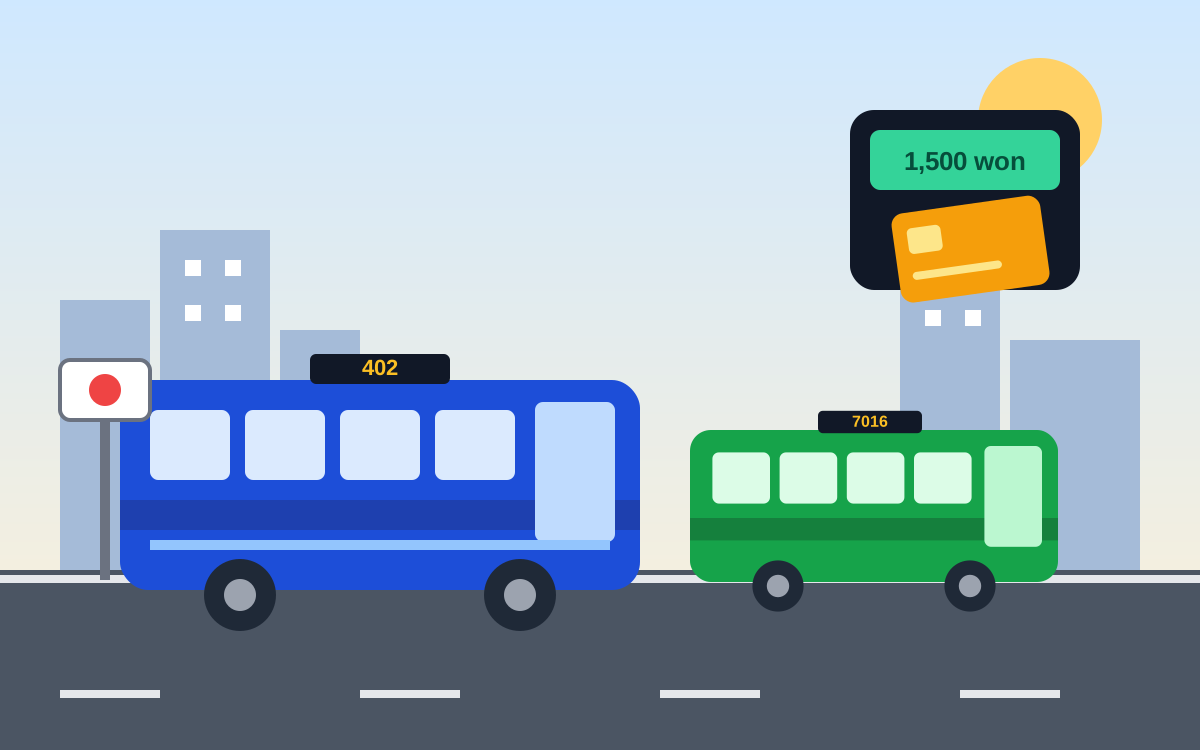
A Seoul blue or green city bus costs about 1,500 won with a T-money card. Board at the front door and tap in, press the stop button before your stop, then exit by the rear door and tap out so transfers work. Cash costs about 100 won more.
- Typical fare
- About 1,500 won (blue and green, card)
- Pay with
- T-money or another transit card
- Transfers
- Within 30 minutes (60 at night), tap in and out
- Official info
- Seoul TOPIS bus guide
What should I know before I ride?
Fares and rules checked October 8, 2026
Get a transit card and a map app before you board, because Seoul buses are built around card payment and tapping out. Most drivers do not speak English, so know your stop name and the bus number in advance. Seoul Tourism Organization suggests showing the Korean name of your destination on your phone if you need help (Seoul bus guide).
- Worth knowing: A T-money card costs 2,500 won, is non-refundable and is sold at convenience stores such as 7-Eleven, GS25, CU and Ministop, per Seoul Tourism Organization.
- A common mistake: Forgetting to tap the card on the exit reader. Tapping out is what lets the system apply your transfer discount.
- Local tip: Use KakaoMap or Naver Map for bus arrival times. Seoul Tourism Organization notes that Google Maps does not give transit directions in Korea.
What do the Seoul bus colors mean?
Each color is a route type: blue for long trunk lines, green for local feeders, yellow for city-centre loops and red for express routes to the suburbs. The Seoul TOPIS English page lists the blue, green, yellow and red regional buses plus customized, night and airport services, and gives the numbering system for each.
- Blue (trunk): long routes between major districts, often on bus-only median lanes.
- Green (branch): shorter feeder routes linking neighbourhoods with subway stations and blue-bus corridors. Their numbers have four digits.
- Yellow (circulator): loops around the city centre, such as the 01A and 01B around Jongno's palace area.
- Red (express): long-distance routes to Gyeonggi-do and satellite cities such as Suwon, Bundang and Ilsan. Red bus numbers start with 9.
- Village (maeul): small buses for steep or narrow streets.
- Night Owl: routes with an N before the number run after regular buses stop.
Practical example: if you are travelling between two distant districts, look for a blue bus. If you are going from a subway station up into a hillside neighbourhood, a green or village bus is more likely.
How much does a Seoul city bus cost?
A blue or green bus costs about 1,500 won with a transit card, and a village bus about 1,200 won. The Seoul Metropolitan Government transport page gives 1,500 won for city buses and 1,200 won for village buses. Other figures below come from Seoul Tourism Organization, so treat them as approximate.
| Bus type | Adult fare | Notes |
|---|---|---|
| Blue or green | About 1,500 won | Youth about 900 won, child about 550 won |
| Village (maeul) | About 1,200 won | Small neighbourhood buses |
| Yellow | About 1,400 won | City-centre loops |
| Red | About 3,000 won | Distance charge may apply on long routes |
| Night Owl (N) | About 2,500 won | Runs late at night |
Paying cash costs roughly 100 won more and does not earn transfer benefits. Children under 6 ride free when accompanied by a guardian, up to three children per guardian, according to the Seoul transport page. Boarding before 06:30 with a card earns a 20 percent discount on the first ride's base fare.
How do I ride a Seoul bus step by step?
Wave the bus down, tap your card at the front door, press the stop button early, and tap out at the rear door.
- Find your bus. Check the number and direction on the stop display or in your map app.
- Signal the driver. Wave as the bus approaches. Seoul Tourism Organization notes that buses do not always stop unless someone signals or is waiting to get off.
- Board at the front and tap in. Tap your card on the reader beside the driver.
- Move inside. Take a seat or hold a handrail, and keep clear of the doors.
- Press the stop button. Press one of the red buttons on the rails or seat backs about one or two stops before your stop.
- Exit by the rear door and tap out. Tap your card on the reader near the rear door as you leave, before you step off.
How do bus transfers and night buses work?
With a card you can transfer between buses and the subway within 30 minutes of leaving the previous vehicle, or 60 minutes between 21:00 and 07:00, paying only the added distance or fare difference. The Seoul transport page says the discount applies to Seoul, Gyeonggi and Incheon city and village buses, the Seoul subway and GTX-A, for up to five consecutive boardings.
- Tap every time: Tap in on boarding and tap out on exiting each vehicle, or the system cannot link the legs.
- Do not retrace your trip: Seoul Tourism Organization warns that boarding the same bus number again may be charged as a new trip.
- Base distance: Per the Seoul transport page, only the base fare applies for the first 10 km of a transfer trip, then an extra charge applies every 5 km.
- Hours: Regular routes typically start around 4:00 to 5:30 am and stop between 11 pm and midnight. Night Owl buses run roughly 11:30 pm to 4 am.
Practical example: if you take the subway to a station and then a green bus to a neighbourhood within the transfer window, you pay one base fare plus any distance extra, not two full fares. A taxi or the Kakao T guide may suit late nights when buses are infrequent.
FAQ
Do Seoul buses accept cash?
Yes, but cash fares are about 100 won higher than card fares and do not earn transfer benefits, so a T-money card is better value.
How do I tell the bus where I want to get off?
Press one of the stop-request buttons on the rails or seats before your stop. The display at the front and the announcements show the next stop.
Can I use Google Maps for Seoul buses?
Seoul Tourism Organization says Google Maps does not provide transit directions in Korea, and recommends KakaoMap or Naver Map instead, both of which have English modes.
Do I have to tap my card when I get off?
Yes. Tapping out at the rear door is how the system calculates distance and applies your transfer discount, so skipping it can mean a higher fare or a lost transfer.
Are there buses late at night?
Regular routes usually stop between about 11 pm and midnight. Night Owl buses with an N number run roughly 11:30 pm to 4 am, but frequencies are around 30 to 45 minutes, per Seoul Tourism Organization.
Official sources and useful links
Links open in a new tab. Fares and times above are approximate; verify on these pages.
- Seoul TOPIS bus information official bus types, colors, numbering and distance fares
- Seoul Metropolitan Government transport fares city and village bus fares, transfer rules, early-morning discount
- Seoul Tourism Organization bus guide visitor tips on boarding, stop buttons, apps and night buses
- VisitKorea (Korea Tourism Organization) official tourism information in English
Disclosure: This site shows ads served by Google AdSense, and some links may be affiliate links that earn a small commission at no extra cost to you. This never affects our recommendations. Prices and rules change, so please confirm details with the official sources before you travel.