Myeongdong vs Hongdae vs Insadong: Which Suits You?
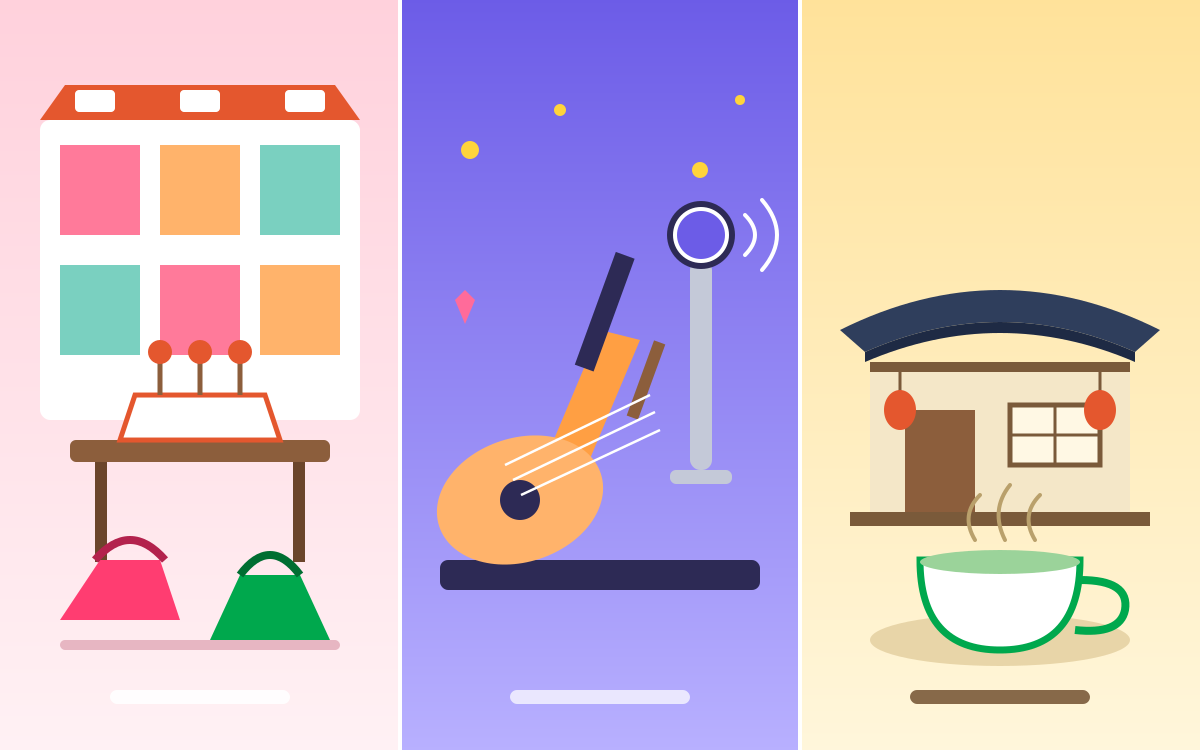
Pick Myeongdong (Line 4, Exits 5 to 10) for cosmetics, shopping and street food. Pick Hongdae (Hongik University Station) for busking, cafes and nightlife. Pick Insadong (Anguk Station, Line 3) for traditional crafts, tea houses and temples. Most first-timers enjoy two areas well, not three rushed.
- Myeongdong
- Shopping, cosmetics, street food; Line 4
- Hongdae
- Busking, cafes, nightlife; Line 2 and AREX
- Insadong
- Crafts, tea, temples; Line 3 and Line 1
- Official sites
- Visit Seoul · VisitKorea
What should I know before I arrive?
Details checked October 15, 2026
All three areas are easy to reach by subway, but each has a different personality, so choose by mood rather than by fame. They sit in different parts of Seoul, so combining all three in a single day means a lot of time on trains.
- Worth knowing: Opening hours vary by shop in every area. Visit Seoul: Myeongdong says Myeongdong shops are open daily with hours that vary by store, and Visit Seoul: Insa-dong lists no set hours for the Insadong street itself.
- A common mistake: Treating the three as one trip. Pairing one traditional area with one modern area makes a more relaxed day.
- Local tip: Check which exit you need before you leave the station. Exit numbers matter in all three areas.
How do the three areas compare?
Myeongdong is for shopping, Hongdae is for youth culture and evenings, and Insadong is for tradition and souvenirs. The table below summarises what the official tourism pages say about each area.
| Area | Best for | Subway | Known for |
|---|---|---|---|
| Myeongdong | Shopping and street food | Line 4, Myeongdong Station, Exits 5 to 10 | Cosmetics stores, street stalls, department stores |
| Hongdae | Nightlife, busking, cafes | Hongik Univ. Station (Line 2, Gyeongui-Jungang, AREX); Exit 8 for the busking street | Buskers, Club Street, small shops and cafes |
| Insadong | Souvenirs, tea, temples | Anguk (Line 3) or Jongno 3-ga (Lines 1, 3, 5), Exit 5 | Tea houses, galleries, crafts, Ssamziegil |
Because the three areas differ so much, the better question is what you want from the afternoon. If you are still choosing a base for the whole trip, read Where to Stay in Seoul.
Who is Myeongdong for?
Myeongdong suits shoppers and anyone who wants Korean cosmetics and street food in one compact area. Visit Seoul: Myeongdong describes a mix of street stalls and retail outlets selling everything from high fashion to casual wear, with many Korean cosmetics stores, and lists the nearest station as Line 4, Myeongdong Station, Exits 5 to 10.
- Shopping: VisitKorea: Myeong-dong names Lotte, Shinsegae, Myeong-dong Migliore, Noon Square and M Plaza among the department stores and shopping centres here.
- Food: The same page says many restaurants specialise in dongaseu (pork cutlet) and kalguksu (noodle soup).
- Prices: Visit Seoul calls prices relatively affordable compared with Apgujeong and Cheongdam, but no specific prices are listed, so compare in the shop.
- Help desk: The Myeong-dong Tourist Information Center is open daily 09:00 to 18:00, near Euljiro 1(il)-ga Station (Line 2), Exit 5, and offers multilingual help.
If you plan to buy a lot, read our tax refund guide first.
Who is Hongdae for?
Hongdae suits younger travellers and anyone who wants live street performance, cafes and an energetic evening. VisitKorea: Hongdae describes a neighbourhood known for its youthful ambience, with buskers, dance performances, cafes, and shops selling clothing, cosmetics, living goods and books. It also names Ateliers' Street, Picasso's Street and Club Street.
- Getting there: Hongik University Station is served by Line 2, the Gyeongui-Jungang Line and the Airport Railroad (AREX), so it works well from the airport.
- Busking: The Hongdae R2 Busking Street listing gives Exit 8, about 170 metres away. It says performances run through a prior registration system and gives no fixed schedule, so do not rely on seeing a specific act.
- Seasonal events: The same page mentions a Welcome Event for Tourists in the spring and autumn peak seasons.
- Timing: Official pages do not give a closing time for the area. Shops and cafes set their own hours.
Hongdae pairs well with a cafe stop. See our hanok cafes guide if you prefer a quieter traditional setting.
Who is Insadong for?
Insadong suits travellers who want traditional crafts, tea and a gentle walk past temples. Visit Seoul: Insa-dong describes wooden tea houses, galleries, street vendors, antique shops, stationery, handicrafts, pottery and bookstores, and lists no admission fee for the street.
- Getting there: Visit Seoul lists Anguk Station (Line 3), Exit 5, about 418 metres away, and Jongno 3(sam)-ga Station, Exit 5, about 438 metres away. Its FAQ mentions Exit 6 for Anguk, so confirm the exit on the station signs.
- Ssamziegil: This complex opened in 2004 and, according to Visit Seoul, has more than 70 shops including craft shops, galleries, tea houses and restaurants. A spiral path leads up to the rooftop.
- Sundays: Visit Seoul says the streets become traffic-free on Sundays, with street performances.
- Walk: The Visit Seoul Insadong walking course runs 2 to 3 hours from Tapgol Park and passes Ssamzie-gil, Jogyesa Temple and Bosingak. Its guided tour needs a booking at least three days ahead.
Insadong sits close to Bukchon, so many visitors combine them. Our Bukchon visiting rules guide explains the 10:00 to 17:00 tourist window, which is useful when planning the order of your day.
Which area should I choose?
Choose by your main goal: Myeongdong to shop, Hongdae for evening energy, Insadong for tradition. Use these examples as a starting point.
- Shopping-focused trip: Spend an afternoon and evening in Myeongdong, and add Insadong for souvenirs on another day.
- Culture and photography: Start in Insadong in the morning, then continue to the nearby palaces and Bukchon.
- Nightlife and music: Arrive at Hongdae in the late afternoon, eat there, then stay for the busking and clubs.
- Only one day: Insadong in the morning and Hongdae in the evening gives the biggest contrast, with a break in between.
For the wider picture, see First Time in Seoul: The Neighborhoods Worth Your Time, and use our Seoul subway guide for fares and cards.
FAQ
Which is best for first-time visitors: Myeongdong, Hongdae or Insadong?
It depends on your interests. Myeongdong is the easiest for shopping and street food, Insadong is best for traditional crafts and tea, and Hongdae is best for youth culture and evenings. Many first-timers pick two of the three rather than all of them.
Which area is best at night?
Hongdae has the strongest reputation for nightlife, with Club Street and busking, while Myeongdong stays busy in the evening with street stalls and shops. Insadong is better in the daytime, and its car-free Sundays are a daytime event.
Which subway lines serve each area?
Myeongdong is on Line 4 (Exits 5 to 10), Hongdae is at Hongik University Station on Line 2, the Gyeongui-Jungang Line and AREX, and Insadong is reached from Anguk Station on Line 3 or Jongno 3-ga Station on Lines 1, 3 and 5.
Is Insadong free to visit?
Yes. Visit Seoul lists no admission fee for walking the street. Individual museums, tea houses and shops set their own prices, so check before you go in.
Can I see all three in one day?
It is possible, but tiring. A more comfortable plan is Insadong in the morning, Myeongdong in the afternoon and Hongdae in the evening, using the subway between areas and leaving buffer time for crowds.
Official sources and useful links
Links open in a new tab. Hours and rules can change; verify on these pages.
- Visit Seoul: Myeongdong official shopping page with address and station exits
- VisitKorea: Myeong-dong department stores and food in Myeong-dong
- VisitKorea: Hongdae overview of Hongdae streets and atmosphere
- Hongdae R2 Busking Street busking street location, exit and registration system
- Visit Seoul: Insa-dong Insadong station exits, Ssamziegil and Sunday traffic-free streets
- Visit Seoul Insadong walking course 2 to 3 hour course through Insadong, Jogyesa and Bosingak
- Myeong-dong Tourist Information Center multilingual help desk in Myeongdong
- VisitKorea (Korea Tourism Organization) official tourism information in English
Disclosure: This site shows ads served by Google AdSense, and some links may be affiliate links that earn a small commission at no extra cost to you. This never affects our recommendations. Prices and rules change, so please confirm details with the official sources before you travel.