Haeundae vs Gwangalli: Which Busan Beach Suits You?
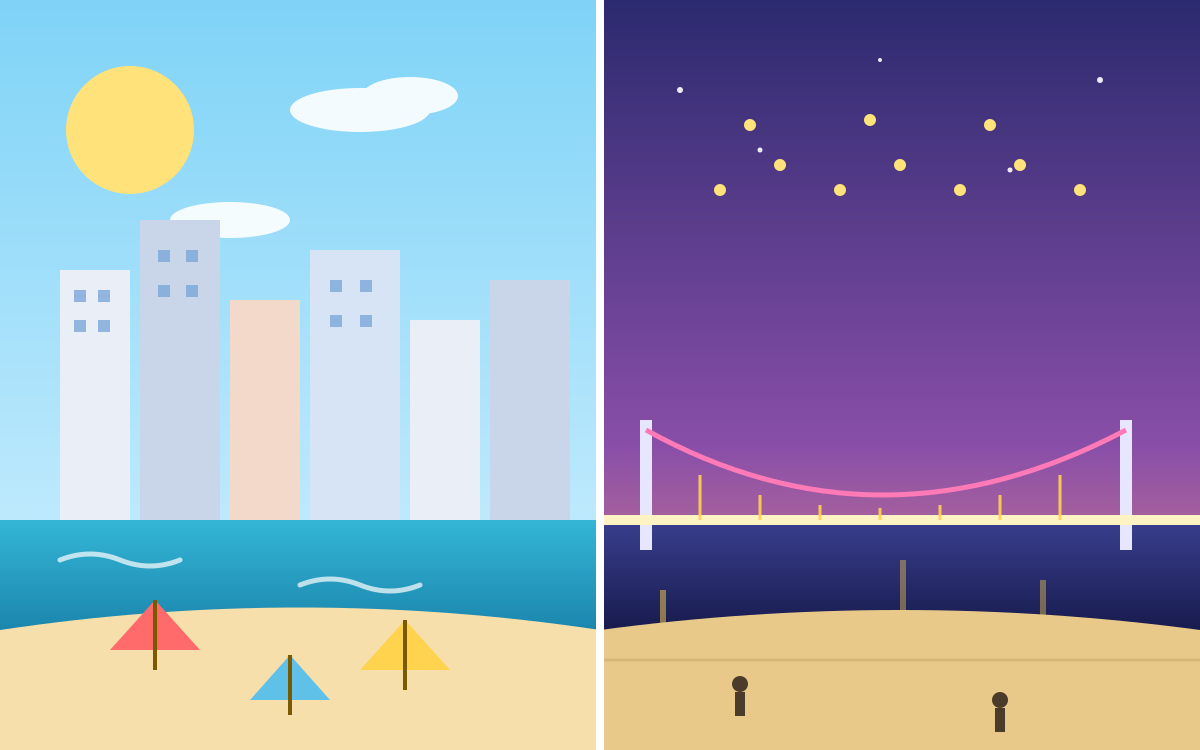
Pick Haeundae for the longer 1.5 km beach and the earlier swim season, which opened June 26 in 2026. Pick Gwangalli for 1.4 km of sand facing a lit bridge, cafes and free Saturday drone shows. Both sit on Busan Subway Line 2, about four stops apart.
- Haeundae
- About 1.5 km; Haeundae Station (Line 2), Exit 3 or 5
- Gwangalli
- About 1.4 km; Gwangan Station (Line 2), Exit 3 or 5
- 2026 swim season
- Haeundae June 26 to Sept 15; Gwangalli July 1 to Aug 31
- Official site
- Visit Busan
What should I know before I arrive?
Details checked October 27, 2026
Haeundae and Gwangalli are two city beaches in Busan's east, both free to enter and both on Subway Line 2, so you do not have to choose one for the whole trip. Haeundae is in Haeundae-gu, and Gwangalli is in Suyeong-gu, to the west of Haeundae.
- Worth knowing: Busan's city government reported 21.979 million beach visits across its seven main beaches in 2025, up 11.4% from 2024, in its Busan city 2026 beach-opening notice. Expect crowds on summer weekends.
- A common mistake: Arriving outside the swim season and expecting lifeguards or open beach zones. In 2026 the official season ran only from late June or July to August or mid-September.
- Local tip: Beach hours in the notice are 09:00 to 18:00. Evening is for walking, cafes and the Saturday drone show at Gwangalli.
How do Haeundae and Gwangalli compare?
Haeundae is longer, livelier and better for swimming; Gwangalli is calmer, more scenic at night and better for cafes. The figures below come from official city pages where available, and the lengths from tourism and reference pages.
| Feature | Haeundae | Gwangalli |
|---|---|---|
| Length | About 1.5 km, per Busan tourism | About 1.4 km, per Wikipedia |
| Subway | Haeundae Station, Line 2, Exit 3 or 5, about a 5-minute walk | Gwangan Station, Line 2, Exit 3 or 5 |
| 2026 swim season | June 26 to September 15, 09:00 to 18:00 | July 1 to August 31, 09:00 to 18:00 |
| Signature view | Resort towers, Dongbaek Island, Oryukdo in the distance | Gwangandaegyo Bridge lit at night |
| Night event | Summer sea festivals, per tourism page | Free Saturday drone light show |
| Admission | Free | Free |
Station and admission details are on the city pages for Busan city beach page for Haeundae and Busan city beach page for Gwangalli. The length of Haeundae comes from the Busan tourism page for Haeundae Beach, which was last modified in March 2022, and Gwangalli's length and width from the Wikipedia entry for Gwangalli Beach.
What is Haeundae best for?
Haeundae suits first-time visitors who want a long, busy beach, a summer swim and a full resort district around it. The beach is about 1.5 km long and covers roughly 56,000 square meters, according to the Busan tourism page for Haeundae Beach.
- Facilities: the city page lists a tourist information center, restrooms, showers, changing rooms and paid parking.
- Nearby sights: Dongbaek Island, with pine trees, a circular walking course and a mermaid statue, plus Haeundae Hot Springs, described as the only hot spring in Korea near the sea.
- Events: the tourism page mentions summer sea festivals and an early-June Sand Festival, but the page is dated, so check current dates before planning around them.
Practical example: a traveler with a day to spare in July can swim at Haeundae in the morning, walk Dongbaek Island after lunch and relax in the district's cafes.
What is Gwangalli best for?
Gwangalli suits travelers who want a calmer shoreline, cafes and a famous night view across the water. The beach is about 1.4 km long and 25 to 110 meters wide, according to the Wikipedia entry for Gwangalli Beach.
- The bridge view: the city page highlights Gwangandaegyo Bridge for its night views, with restaurants, cafes and fish markets along the shore.
- Drone shows: the Suyeong-gu drone show notice said shows run every Saturday, about 10 minutes long and free. It listed 20:00 and 22:00 from March to September and 19:00 and 21:00 from October to February. That notice is from 2025, so confirm the current schedule.
- Water sports: the city page mentions yachting, stand-up paddleboarding and surfing.
- Facilities: a tourist information center, restrooms, showers, changing rooms and a foot-washing station.
Weather or technical problems can delay or cancel a show, so do not plan a tight schedule around it.
Which beach is better for swimming?
Haeundae has the longer season, so it is the better choice if you want to swim. The Busan city 2026 beach-opening notice gave Haeundae June 26 to September 15 and Gwangalli July 1 to August 31, both from 09:00 to 18:00.
- Haeundae, Gwangalli and Ilgwang have jellyfish-blocking nets and protective facilities, according to the notice.
- The notice says the 119 Citizen Water Rescue Squad operates at seven beaches from June to September, and lifeguard staffing follows expected crowds.
- The notice covers 2026. Seasons are set each year, so confirm the dates for your travel year.
How do I get between the two beaches?
Ride Subway Line 2 between Haeundae Station and Gwangan Station, then walk to the sand. A transit guide describes the trip as four stops and about 8 minutes on the train, plus a short walk, with no transfer needed. A T-money card fare of about 1,400 won was quoted, but fares change, so check the current fare in the Busan Metro app or at the station.
- Start at the station. Use Haeundae Station Exit 3 or 5, or Gwangan Station Exit 3 or 5, as listed on the city pages.
- Take Line 2. Choose the direction toward the other beach; Gwangan is west of Haeundae.
- Walk to the sand. Haeundae is about a 5-minute walk from its station, per the city page.
- Plan your return. If you stay for a night show, check the last train before you go.
A taxi is a backup for late nights or heavy luggage; the same guide quoted roughly 10 to 15 minutes, but this is an estimate.
Which beach should I choose?
Choose Haeundae for swimming and a full-day beach trip, and Gwangalli for an evening with bridge views and cafes. If you only have one day, you can split it: Haeundae in the daytime, then Line 2 to Gwangalli for dinner and the lit bridge.
- First visit in summer: Haeundae, then Gwangalli at night.
- Outside the swim season: Gwangalli for the view and a cafe walk, or Haeundae for Dongbaek Island.
- Staying in Busan more than two days: see how the beaches fit into a 3-day Busan plan.
FAQ
Which is better for swimming, Haeundae or Gwangalli?
Haeundae has the longer official 2026 swimming season, June 26 to September 15, while Gwangalli opened July 1 to August 31. Both listed hours of 09:00 to 18:00. Haeundae is usually the safer choice for a summer swim.
How do I get from Haeundae to Gwangalli?
Both are on Busan Subway Line 2. Ride from Haeundae Station toward Gwangan Station, about four stops and roughly 8 minutes according to a transit guide, then walk to the beach. A taxi is an option late at night.
Are the Gwangalli drone shows free?
Yes. The Suyeong-gu Office lists admission as free for the Saturday drone light show. A 2025 notice gave 20:00 and 22:00 from March to September and 19:00 and 21:00 from October to February, but weather can cancel a show.
Can I stay near one beach and visit the other?
Yes. The two beaches are on the same subway line, so you can base yourself at either and visit the other in about 15 to 30 minutes door to door. Check the last train time if you stay for a night show.
Official sources and useful links
Links open in a new tab. Seasons, schedules and fares above are approximate; verify on these pages.
- Busan city: Haeundae Beach station exit, facilities and address
- Busan city: Gwangalli Beach station exit, facilities and nearby attractions
- Busan city: 2026 beach opening notice swim season dates, hours and safety measures
- Suyeong-gu: Gwangalli drone light show Saturday show times and cancellation notes
- Visit Busan official city tourism portal
- VisitKorea (Korea Tourism Organization) official tourism information in English
Disclosure: This site shows ads served by Google AdSense, and some links may be affiliate links that earn a small commission at no extra cost to you. This never affects our recommendations. Prices and rules change, so please confirm details with the official sources before you travel.