Arriving in Korea: Immigration and Customs Step by Step
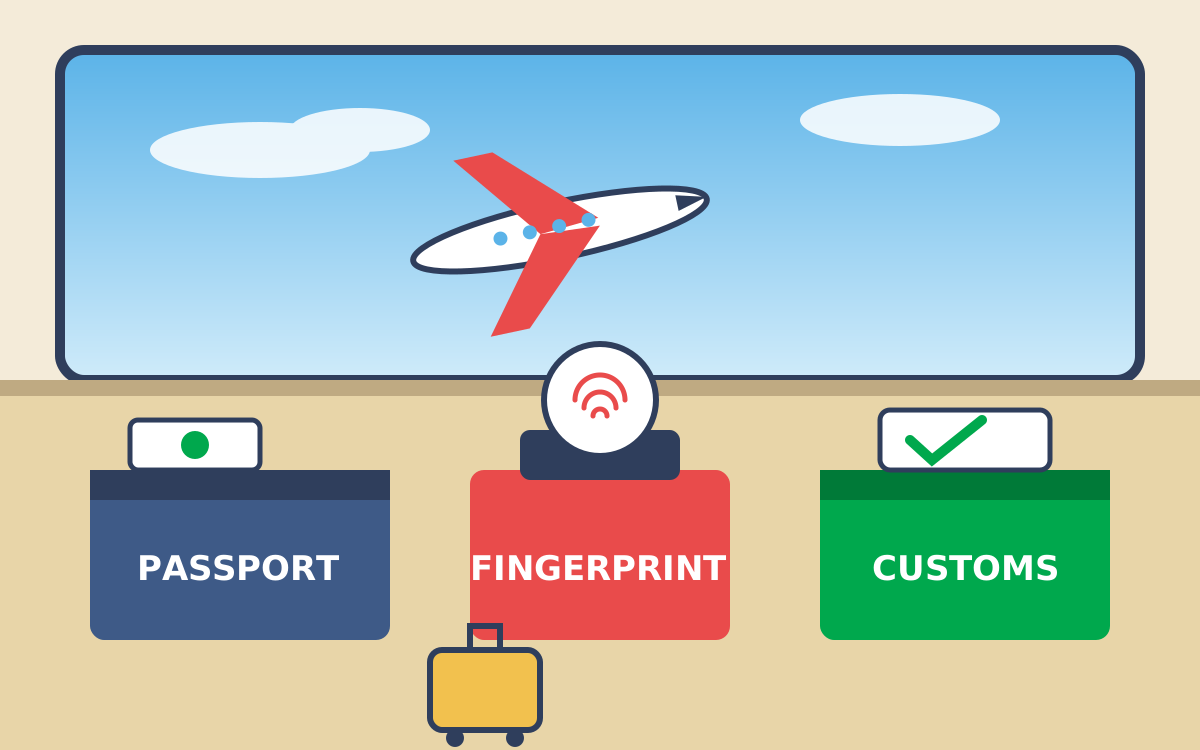
Most visitors need three things to enter Korea: a passport, the free e-Arrival card submitted online within three days before landing, and fingerprints plus a face photo at immigration. Declare anything over USD 800, more than USD 10,000 in cash, or fruit, plants and meat products at customs.
- Before you fly
- Submit the e-Arrival card (free), unless you hold a K-ETA
- At immigration
- Passport, fingerprints of both index fingers, face photo (age 17+)
- Duty-free limit
- USD 800 per person, with separate alcohol and tobacco limits
- Official site
- Incheon Airport arrival procedures
What should I know before I arrive?
Rules checked October 14, 2026
Entry is a short, fixed sequence, and the only step you can do in advance is the online arrival card. Incheon Airport lists the order as the information and declaration area, immigration, baggage claim and then the arrival hall, as described on its arrival procedures page.
- Worth knowing: Foreign visitors use the foreign-passport line at immigration. Incheon Airport marks it as the red line and the Korean-passport line as blue.
- A common mistake: Skipping the e-Arrival card because your country is visa-exempt. Exemption from a K-ETA is not the same as exemption from the card; see our K-ETA guide.
- Local tip: Take off your hat and sunglasses before you reach the booth, because the photo is taken there.
Which forms do I need before landing?
Submit the free e-Arrival card online before you fly, unless you hold a valid K-ETA, and prepare a customs declaration only if you have something to declare. According to VisitKorea, you can file at the e-Arrival card website up to three days before arrival (Korea time), and a printout is not needed once the online submission has succeeded.
- e-Arrival card: Free. Holders of a valid K-ETA, registered foreigners and airline crew are exempt, according to Incheon Airport.
- Customs declaration: Needed only if you carry items to declare, and one form covers a family. VisitKorea says it can be completed online through the Korea Customs Declaration for Travelers app or the customs website, then scanned by QR code at the declaration gate.
- Q-CODE: VisitKorea says this is required only for travelers arriving from designated quarantine-inspection areas. Check the current list before you fly.
Practical example: a traveler landing on November 10 would submit the e-Arrival card between November 8 and 10, then screenshot the confirmation in case the airport Wi-Fi is slow.
What happens after I get off the plane?
You move through four stages: information and declaration, immigration, baggage claim and customs, then out into the arrival hall.
| Stage | What happens | Have ready |
|---|---|---|
| 1. Arrival gate | Walk from the aircraft to the terminal; concourse arrivals take a free shuttle train | Passport in hand |
| 2. Information and declaration | Quarantine and customs information; hand in a declaration if you have items to declare | Declaration form or QR code |
| 3. Immigration | Foreign-passport line, passport check, fingerprints and photo | Passport, e-Arrival confirmation if required |
| 4. Baggage claim | Find your flight number on the carousel board and collect bags on the 1st floor | Baggage tag |
| 5. Customs exit | Duty-free tunnel if you have nothing to declare, inspection tunnel if you do | Declared items and receipts |
Airport staff can answer questions on the Incheon Airport information number, 1577-2600, which the airport lists as open 07:00 to 22:00 every day.
What happens at immigration?
An officer checks your passport, then scans both index fingers and takes a face photo; queue length varies with how many flights land at once. Foreigners aged 17 and older must provide both, apart from limited exceptions such as official government invitees, according to VisitKorea.
- Join the right line. Pick the foreign-passport line. Priority lanes exist for children under 7, seniors 70 and over, pregnant women and people with mobility impairments.
- Hand over your passport. Show your e-Arrival confirmation if the officer asks for it.
- Place your fingers and look at the camera. Remove sunglasses and hats, and do not hold up a phone.
- Move on to baggage claim. Once the officer has finished, note your baggage claim number and take the escalator down to the 1st floor.
If you register your biometrics on this trip, tourists aged 17 and over can use the automated gates when leaving, according to the Korea Immigration Service.
What can I bring through customs?
You can bring goods worth up to USD 800 duty-free, plus limited alcohol, tobacco and perfume, and you must declare anything above those limits. The figures below come from VisitKorea and the Incheon Airport customs page; both stress that rules can change.
| Item | Allowance |
|---|---|
| Total goods | Up to USD 800 |
| Alcohol | 2 bottles, up to 2 litres and USD 400 |
| Cigarettes | Up to 200 (one carton) |
| Perfume | Up to 100 ml |
- Cash: A consular summary from the Ministry of Foreign Affairs says foreign or Korean currency above USD 10,000 must be declared on arrival. That page is older, so confirm the figure with Korea Customs Service.
- Food, plants and animal products: The same summary says fruit, vegetables, seeds, plants and animal products must be declared, and uncertified products can be confiscated and destroyed.
- Age limit: VisitKorea says travelers aged 19 and younger cannot claim the alcohol and cigarette allowances.
- Prohibited material: Counterfeit currency and publications or media that threaten public security are banned, and confiscated items can lead to criminal liability, according to the airport.
Practical example: a traveler buying three bottles of whisky abroad should declare the third bottle, because the allowance is two bottles, and the declaration is faster than an inspection.
FAQ
Do I need to fill out a form before landing in Korea?
Most foreign visitors submit the free online e-Arrival card within three days before arrival. Holders of a valid K-ETA, registered foreigners and airline crew are exempt, and a customs declaration is needed only if you carry items to declare.
Will I be fingerprinted when I enter Korea?
Yes. Foreigners aged 17 and older have both index fingers scanned and a face photo taken at immigration, with limited exceptions such as official government invitees.
How much can I bring into Korea duty-free?
Per person, goods worth up to USD 800 in total, plus up to 2 bottles and 2 litres of alcohol worth no more than USD 400, 200 cigarettes and 100 ml of perfume.
Can I bring fruit, meat or plants into Korea?
Plants, fruit, vegetables, seeds and animal products must be declared on arrival, and products without a quarantine certificate can be confiscated and destroyed. When in doubt, declare it.
Do I have to declare cash when entering Korea?
Yes, if you carry foreign or Korean currency worth more than USD 10,000, you must declare it to a customs officer. Confirm the current rule with Korea Customs Service.
Official sources and useful links
Links open in a new tab. Rules and allowances above were checked October 14, 2026; verify on these pages before you travel.
- Incheon Airport arrival procedures step order from gate to arrival hall
- Incheon Airport immigration page e-Arrival card, lanes and priority groups
- Incheon Airport customs declaration duty-free allowance and declaration tunnels
- VisitKorea immigration guide fingerprints, photo, customs app and Q-CODE
- e-Arrival card official online arrival card
- Korea Customs Service official customs rules for travelers
Disclosure: This site shows ads served by Google AdSense, and some links may be affiliate links that earn a small commission at no extra cost to you. This never affects our recommendations. Prices and rules change, so please confirm details with the official sources before you travel.